Energy Efficient Offices

Offices are energy-consuming buildings; between heating and cooling, lighting, and technology and equipment required to run a business, the amount of energy used continues to rise. 

With more builders and contractors committing to sustainable building, commercial offices are becoming more green, or environmentally friendly. Green buildings are designed and constructed with sustainable materials that make the building more energy-efficient and reduces energy costs.

Business owners don’t often have control over how the building was built, unless moving into a brand new development. But there are things every office can do to maximize energy conservation and reduce costs. 

HVAC 

Space heating accounts for 25% of energy use in commercial buildings, according to the U.S. Energy Information Administration (EIA). Ideally, a building will have proper insulation to help maintain a comfortable temperature. In older buildings, this cannot always be achieved. Whether you are leasing office space or own the building, maintaining your HVAC system can help decrease energy use and save money. Here are some ways to make the most of your HVAC:

  • Clean filters. Dirty filters slow down airflow. Check any filters regularly and change as necessary.
  • Program heating and cooling. Program the temperature of the office. After employees leave for the day, the heat (or AC) does not need to be turned up as high. 
  • Equipment tune-up. To make sure all systems are working efficiently, get a tune-up from an HVAC professional. 

Lighting

Lighting is one of the easiest ways to make energy-saving changes to your office space. Because lighting makes up 10% of the total energy use in buildings, it is worth the effort.

  • Motion sensor lights. Motion sensor lights are ideal for areas that are occupied during certain times of the day, including parking lots, stairways, and meeting rooms. 
  • Make the most of natural light. Builders are taking more advantage of natural light. Through a process called daylighting, sunlight illuminates buildings, cutting energy use and costs. This provides an added bonus – sunlight increases positive moods of everyone in the workspace. 
  • LED lights. LED bulbs last longer than fluorescent and incandescent lighting, and reduce the amount of energy used. 

Office Technology and Appliances

Offices are filled with technology and appliances – from computers and copiers to refrigerators and microwaves. Being mindful in your selection of these items can significantly reduce energy usage. 

  • Laptops. Laptops use up to 90% less energy than desktops. Depending on how many people work on computers in your office, this can make a significant difference.
  • ENERGY STAR. ENERGY STAR appliances, computers, copiers, televisions, and even fans and thermostats, are the most efficient equipment for the office. 

Minimizing energy consumption in the workplace is beneficial for both the environment and your business savings. As we take on new developments, we are mindful of sustainable practices and work to make each building as environmentally friendly as possible. 


How Drones are Changing Construction Sites

Drones are becoming increasingly popular at construction sites. These small, easy-to-maneuver cameras are controlled from a remote on the ground. They are proving to be useful during every stage of construction, from mapping out a worksite to monitoring safety and timelines. 

Construction sites are large areas where a lot of people and machinery are coming in and out daily. Missing even one detail on the job could cause complications for weeks. Communication, attention to detail, and timeliness are essential to making sure a build happens correctly and on schedule. Drones are being used on construction sites to aid in the process. 

Design and Pre-Construction

When planning to build on a new site, it is necessary to survey the land and prepare plans for the build. Drones quickly and accurately survey the job site. This cuts out surveying tools and human error, which means drones can save both time and money in the initial stages on construction.

In addition to surveying, drone photography gives a clear birds-eye view of the land, which you can use to map out the site. Project managers can then use this real data and merge it with the virtual design of the project. This can help owners visualize the project, making it a useful tool when bidding on a project or explaining your vision to your client. 

During Construction

During construction, drones can collect data to see the progress of the build. Again, this can be useful when meeting with clients to discuss the phase of development. In addition, it helps the project manager to stay on track with the schedule. 

When equipped with streaming video, drones make it possible for the project manager to monitor the work site from another location. Management can instantly communicate needs based on video happening in real-time. This decreases delays that occur when workers need an answer, or a project manager notices an issue that needs to be resolved. Video streaming with drones also allows managers to track materials on the site and acts as a 24-hour surveillance system, keeping the worksite safer. 

Inspections

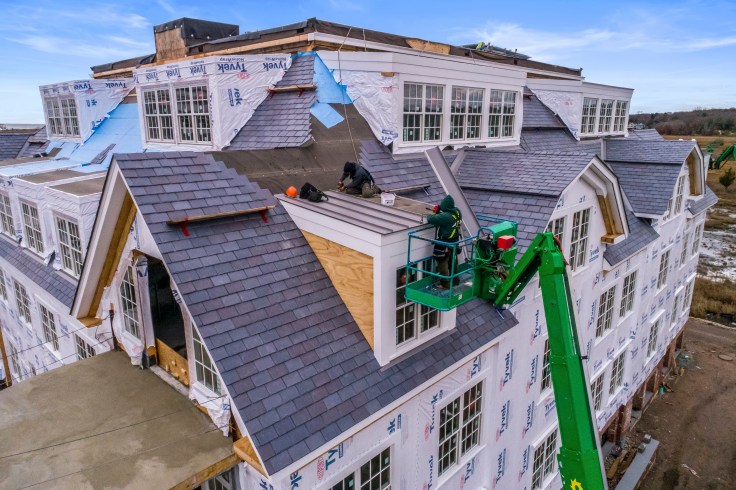
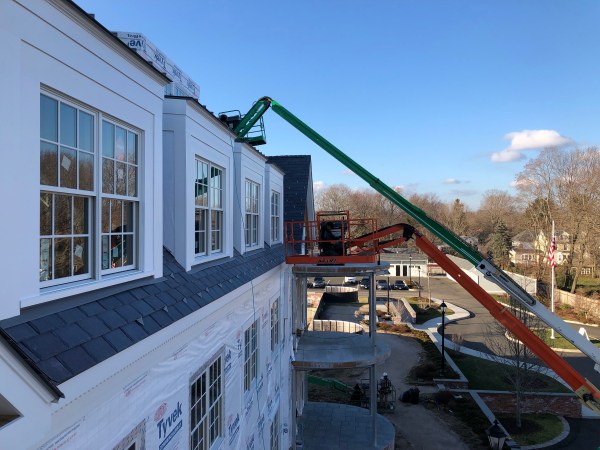
Rigorous inspections can be done almost instantly with drones. These small flying cameras can fit pretty much anywhere, without the need for workers to climb to the roof or below ground. Flying a drone to one of these hard-to-reach areas of the structure saves time, gives a close-up view, and eliminates safety concerns.

Project Completion

Once the project is complete, drone photography and video can show a timelapse of the build from start to finish (as long as the entire project was streamed). Giving your client aerial views of the full project can help with marketing and show the entire site in one photograph. 

Drones, along with other advanced technology, continues to change the construction industry, helping to make worksites safer and more efficient.


4 Benefits of One-Level Living

One-level living does not mean cramped living quarters. In fact, a one-level floor plan lends to an open flow, high ceilings, and can easily provide space for all of your needs – without the need to go up and down the stairs. 

Accessibility

Accessibility is the most significant benefit to one-level living. With everything on one floor, the struggle of ascending and descending the stairs is eliminated. Whether you have a toddler in the house, elderly in-laws staying with you, or plan to retire in the home, one level is easier and safer to navigate. 

At The Residences at 66 High Street, The Whitfield and The Leete feature one-level units, with elevators that go from the parking garage or lobby up to each floor. 

Open Floor Plan Options

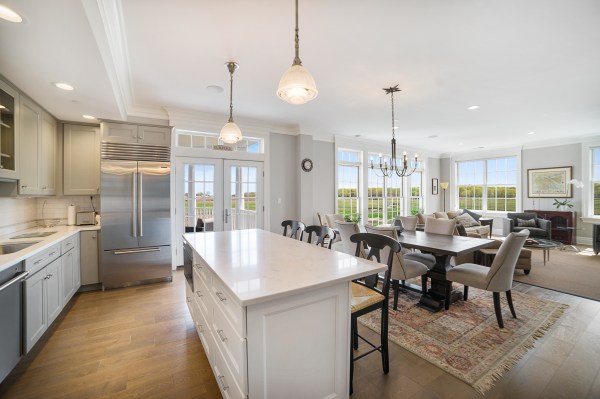
Open floor plans continue to be the most sought after design in homes. An open flow between the most used areas of the home – the kitchen, dining area, and living room – creates a feeling of connection. This holds true whether you are hosting a party or preparing a meal for your family.

With everything on one level, designing an open floor plan comes naturally. There is no family room in the basement or loft on the second level that becomes the gathering space. 

Increased Energy Efficiency

Single story homes usually have a floor plan that air naturally flows through. The HVAC system required for a one-level residence is more sustainable and generally less expensive than what is needed to heat and cool multiple levels properly. 

Easy to Maintain

Both the interior and exterior of single-level houses are easier to keep clean and maintain. Inside, your cleaning supplies and laundry room are on the same floor, which means you do not have to carry items up and down the stairs while cleaning. The exterior is also easier to maintain, whether you are power washing the siding, cleaning the windows, or clearing out gutters. 

With more people aging in place and staying in their homes throughout retirement, one-level living is becoming more sought after. Are you considering moving to a one-story residence? Contact us to discuss floor plan options. 

Merrill Lynch to join 350 Goose Lane Office Park

The Office Park at 350 Goose Lane in Guilford signed a new tenant for Building C – before the scheduled build begins. 

Bank of America Merrill Lynch will occupy the entire third floor of Building C, for a total of 7,472 square feet of office space. With the build scheduled to begin this fall, Horton Group will work closely with Merrill Lynch to customize their office. This will allow the wealth management company the opportunity to create an optimal office floor plan.

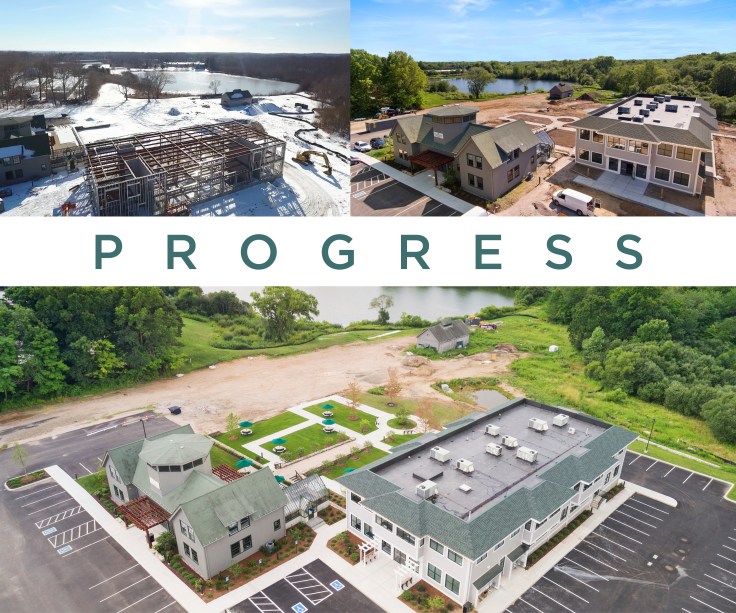
The professional campus consists of three buildings. Building A was an existing building completely renovated by the Horton Group. Buildings B and C are brand new Type II-B construction

Customized Office Plans

Like Merrill Lynch, many of the tenants in buildings A and B signed on before construction was complete, allowing for the design of each office space to match the needs of tenants. 

Customization of work environments is becoming more critical to employers, as research shows that well-constructed office plans and green space can increase productivity and job satisfaction. In the offices at 350 Goose Lane, we have incorporated open layouts, glass walls, private meeting areas, collaborative workspaces, and waiting rooms. Each unique space meets the needs of our tenants. 

Unmatched Campus Green Space

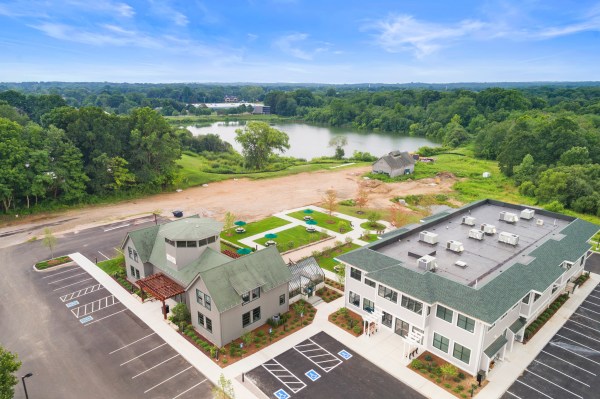
Set on 16 acres, 350 Goose Lane Office Park was once home to Wilber & King Nursery. The impeccable grounds have been maintained for the use of green space by tenants in all three buildings. A beautiful courtyard, with outdoor tables, umbrellas, and wifi, allows people to take an outdoor lunch break or even work outside. All three buildings have views of the courtyard and on-site pond. Green space has been shown to increase feelings of contentment at work. 

“What makes the property really amazing is the amount of green space,” stated Horton Group President Kenny Horton. “It’s not the typical pavement, concrete, and walkways you see with other campuses.”

The Horton Group is thrilled to welcome Bank of America Merrill Lynch to this incredible campus. 

Concrete Flooring Finishes

Concrete has always been popular in garages, basements, and factories due to its durability and low-maintenance. When the only option was a dull gray color, concrete was kept out of more high-profile areas of homes and businesses. 

Textured concrete is changing the way people use this flooring option. Concrete is made with a natural composite material combined with a cement binder and water. Textured concrete can be made smooth, shiny, or with patterns to create the look that you want. 

We go through some of the finishes that can be applied to concrete, so this durable and low-maintenance flooring can also be a focal point in the design of your space. 

Polished Concrete

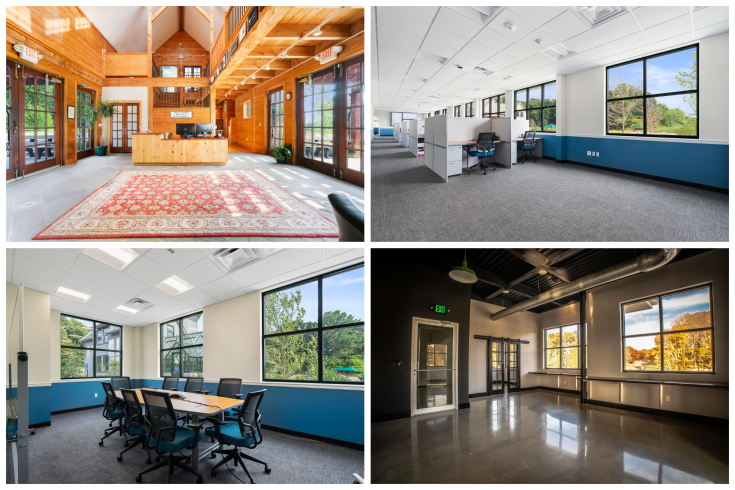
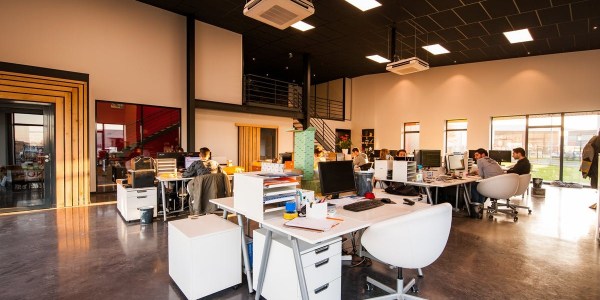
Polished concrete creates a modern feel that can be used in finished basements, kitchens, and living rooms. The process starts by grinding the surface of the floor to the desired smoothness. Then the surface is sealed to create a shiny surface and protect the flooring from moisture and stains. Several tenants in the 350 Goose Lane Office Park opted for polished concrete flooring due to its durability, low maintenance, and modern industrial look.

Stamped Concrete

For a look of paved brick or stone, concrete stamping is an option. Large polyurethane stamps are used on the surface of wet concrete to create a 3-D impression. After stamping, the concrete is sealed. Stamped concrete is often used in outdoor living spaces, such as patios or pool decks. 

Stenciled Concrete

Stenciling is similar to stamped concrete in that it is done on wet concrete that has been poured, floated, and edged. Stencils are made from disposable paper and pressed into the surface to create patterns. Popular stenciling options include mimicking the look of ceramic tile, bricks, or pavers. 

Color

To change the color of a new concrete floor before it is poured, you can add color hardeners or integral pigments directly into the material when being mixed. For subtle color changes, natural dyes are used, while chemical coloring can create brighter colors. 

For an existing concrete floor, you also have options to add in color. These include staining, painting, or using tinted concrete sealers. 

Concrete flooring is being used in residential interiors, outdoor living spaces, and commercial offices. The low-maintenance and highly durable flooring, combined with numerous design options, make concrete a popular choice.

6 Tips for Creating a Productive Office Space

Most people spend more time at the office than their own home throughout the week. When moving into a new office, think beyond cubicles and desks so that you and your employees can be productive in an inspiring and comfortable atmosphere. 

In our commercial projects, Horton Group continues to work closely with a range of business owners to design and build their dream offices.  At our current commercial development, 350 Goose Lane Office Park, we have built offices for large national corporations, small business owners, and everything in between.

Below are six tips for creating a productive office space, no matter what industry you work in.

Ask for Employee Input

Ask your employees what their dream office would look like. You won’t be able to incorporate all of their ideas, but if you find out that 90% of the people working for you would utilize standing desks, for example, you can determine how to fit a couple into your office space. 

When employees are given the opportunity to set up their own workspace, they have more satisfaction and better performance at work compared to employees who have no control over their environment. 

Traffic flow

Utilizing the space efficiently is essential no matter what size office you have. Consider how people will move from work areas to meeting rooms, the bathroom, and kitchen areas. Keeping these common areas clear of clutter makes it much easier to move around the office.  Traffic flow is especially important if you have customers or patients coming in and out of the office all day. 

Don’t Neglect the Basics: Lighting, Noise, and Temperature

We’ve all been uncomfortable or distracted while on the job. The more you can eliminate small annoyances, the better. This means paying attention to lighting, noise, and temperature in the office. 

Natural light is ideal, but not always possible. In spaces without windows, opt for overhead lighting options that mimic natural light. Unnecessary noise at work can decrease productivity and increase headaches. Ask your builder or contractor what can be done to eliminate noise from other offices. Finally, make sure the temperature can be easily controlled in the office. 

Variety of Workspaces

A variety of workspace options is essential in increasing productivity. Some parts of the day may require an independent work station where people can tune out the rest of the office and tackle important phone calls or deadlines. Other times employees may need to connect with coworkers in a collaborative meeting area or a step into a quiet room to decompress. By incorporating numerous spaces to work in, people can move around throughout the day and tailor the space to their work needs. 

Greenspace

Whenever possible, incorporate green space. A beautifully landscaped property can include an additional workspace in good weather. The benefits of green space for employees include increased job satisfaction and decreased stress. 

Plan for Growth

As a business owner, chances are you have a 1, 5, and 10-year plan. Will the office you are creating today be able to hold your vision for the future? Take into consideration the fact that you will expand, leaving some wiggle room for reorganization. 


10 Questions to Ask if Buying New Construction

Brand new everything. No surprise issues behind the walls. Custom designed for your wants and needs. 

New construction is an opportunity for you to build your dream home. While the thought of moving into a never-lived-in-before house is blissful, there can be stressful moments throughout the process. A new build runs much smoother with patience and communication. This means you need to ask your questions upfront and stay in communication throughout the build. 

Below are ten questions to ask your builder or contractor when constructing a new home:

Who is my point of contact during the build?

There will be a lot of people on the construction site, and they may not always be the people you need to speak with. Find out who your point of contact is from the start, and stay consistent in communicating with that person. This will help to eliminate the run-around when you need an answer to a specific question. 

Is the lot included?

Before signing on, the budget will be one of the first things you discuss with your builder. Give your total budget upfront so the builder can keep that in mind as the project moves through each stage. Some builders will have the cost of the lot included in the sale price of the home, while others keep this as a separate transaction for the buyers. Find out whether you need to close on the lot before construction begins. 

What are standard fixtures and what is extra?

Generally speaking, builders have a model that comes with standard features. A builder specifications sheet will go through all standard features in the home. If you want extras and your budget allows for you, determine what is of most importance to you and let your builder know as early on in the build as possible. 

How much input can I have on design?

If starting from the beginning of the build, there can be a lot of flexibility in how much input you have in the design. As the home nears completion, there is less of a chance for you to build-to-suit

If you have a vision that is different than the standard features of extras the builder provides, speak with them to determine if what you want can be incorporated while sticking to your budget. 

When is the scheduled completion?

Once you have determined your budget and design plans, the builder can give you a scheduled completion date. This allows you to plan for how much time you need alternate housing. 

Is a builder’s warranty included?

Find out if the builder’s warranty comes with the completion of the house. Knowing the builder will fix issues that may arise after the sale of the home can eliminate a lot of stress. 

Is landscaping included?

An empty lot means there is a significant amount of work to do with landscaping. If landscaping is not included with the build, you will want to put some of your budget aside so that you can attend to your property. 

Are there homeowner rules?

Is the new home in a development or condominium complex? Find out what the homeowner association rules and regulations, along with the monthly fees, are. It’s best to know this first so that your dream home is also in your dream community. 

Do I need a home inspection?

You may think that because the construction is brand new that you don’t need a home inspection. But it’s important to know that everything has been built up to code. Inspectors know what to look for in newly constructed homes. 

Are there energy-saving features in the home?

Energy-saving features help you live sustainably and can also help save you money on monthly payments. Every year, there are new and advanced technologies to make your home more sustainable and more comfortable. Find out what the builder is doing to keep the build eco-friendly. 

Do you have more questions about new construction process? Contact us.

What are Common Area Maintenance (CAM) fees?

Commercial leases can come with Common Area Maintenance (CAM) fees, which help the landlord pay for upkeep on the property’s common areas. While CAM fees are common in leases, they can vary from space to space and year to year. When signing a lease for a commercial space, be sure you understand all parts of the Common Area Maintenance fees.

What do CAM Fees Cover?

As the term suggests, CAM fees help to pay for the cost and upkeep of common areas in the building and grounds of a commercial property. Common areas can include hallways, shared bathrooms, lobbies, elevators, as well as the parking lot and landscaping. CAM fees in a lease typically include regular maintenance to the property and building, but can also consist of emergency repairs, security systems, signage, insurance, and in some instances salaries of administrative staff.

Variable CAM Fees

If you have a lease with variable CAM fees, this means the fees you are charged can increase based on factors outlined in the contract. If the factors are not explicitly stated, find out what they are from your landlord and get them in writing. You should also find out if there is a cap to how high the fees will go.

Flat CAM Fees

Flat CAM fees in an agreement mean the fees are fixed, and will not adjust up or down. Depending on the lease, these fees can be paid monthly, quarterly, or annually. Sometimes, the costs of major renovations are separate from flat CAM fees. If this is the case, determine if there are scheduled renovations happening in the future.

With commercial leases, there is not a standard on what can and cannot be included in CAM fees. While most landlords will not take advantage of their tenants, it is important to always carefully read your lease and get clarification on any items that are not explicitly stated.


How does the Horton Group eliminate noise in a multi-unit building?

Noise.

It can interrupt your workflow or wake you up from a deep sleep. Unnecessary noise can range from distracting to infuriating, and isn’t something you should deal with in the places you spend the most time in.

With all of our multi-unit buildings, whether a residential luxury condominium community or an office park, we concentrate on eliminating noise.

When you go into an old building, one of the things you may notice right away is the noise of footsteps from the floor above you or overhearing a conversation from a unit over. In the past, buildings were not always soundproofed because there weren’t solutions that were budget-friendly and effective. With today’s materials, soundproofing can be attained in any building. Below are some of the solutions to combat noise travel.

Walls

“Paper-thin” walls are no longer acceptable in buildings. To reduce noise from room to room, soundproofing the walls is an important step. It can be challenging to identify where noise is coming from, as sound travels the path of least resistance. When building, the entire space needs to be taken into consideration, including windows, vents, and doors.

Materials that are dense and resilient are best for blocking sound. For walls, this can be achieved with noise-reducing drywall, double walls (this is perfect for office spaces), and dense insulation.

Flooring

Flooring is another factor in eliminating unwanted noise from neighbors. Just like walls, layering up noise reducing products is most effective.

While carpet with padding underneath is one option for creating dense layers, most people prefer hardwood and tile in their homes. The Residences at 66 High Street were built with materials that make you forget about your upstairs neighbors. We start with a layer of Homasote soundproof board, which is made of 98% recycled materials. The next layer is AdvanTech plywood, followed by engineered hardwood flooring. These three layers help to eliminate noise while combining strength and moisture resistance.

If moving into a new building or searching for office space, ask what has been done to reduce noise. This will save you many headaches in the future.

How to Make Any Size Bathroom Feel Luxurious

Hearing the phrase “spa-like bathroom,” we envision a spacious bathroom, complete with a soaking tub, separate walk-in shower, double vanity, and space for lounging.

If you are building a custom home or completely renovating a house, you can create space for a large bathroom. But, if you are doing a remodel, in most cases you need to stick to the size that you have.

Luxury can be incorporated into any bathroom – large or small – by paying attention to the details. So even if you can’t have a large tub and a separate shower, you can still feel like you just stepped into a spa.

Christina Fay, Bathroom Designer for Bender Showroom, shares tips on how to make any bathroom feel luxurious.

Organization and Color

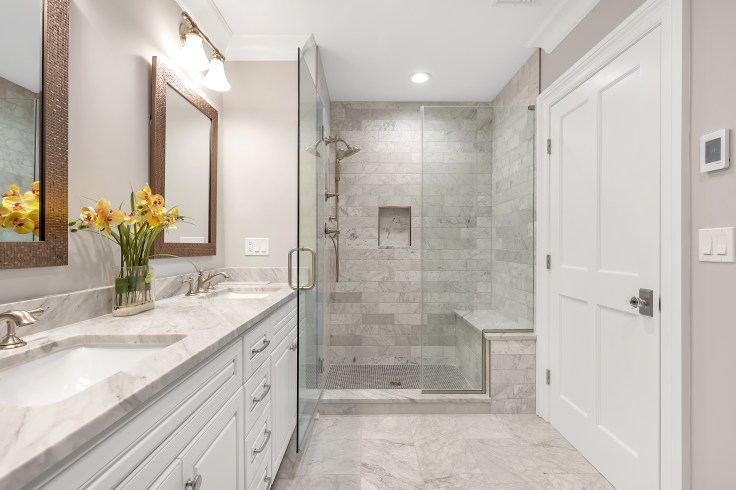
A well-organized space with a clear direction for the flow of traffic can open up a small space. A floating vanity allows you to see the floor all the way to the wall, while a glass panel shower opens up every bit of square footage.

“Coming from the paint industry, I can tell you that the fastest way to feel a change is to change the colors involved. A new feel, a new energy, and a new start for a room starts with a change in colors,” said Christina.

For smaller bathrooms, white or neutral colors help to make a room feel airy. Light and bright colors are reflective and can mimic the effect of natural light, making the room feel larger.

Custom Cabinetry

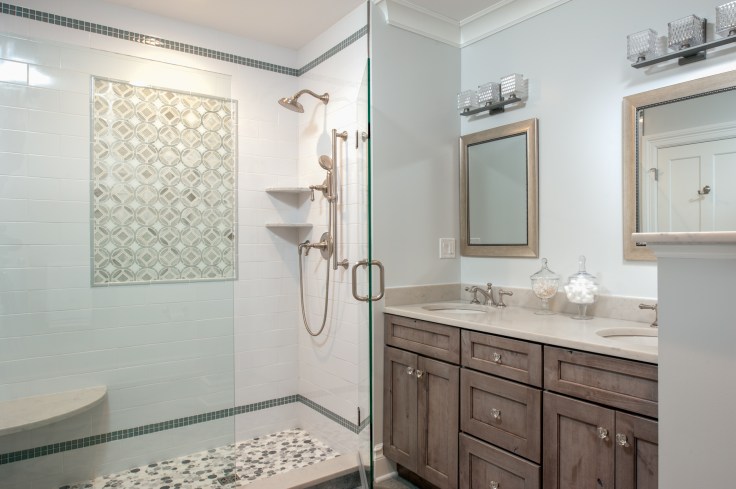
To upgrade a bathroom, custom cabinets with slow closing drawers offer sophistication. Bender worked on the cabinetry in the kitchens and bathrooms at The Residences at 66 High Street, providing each unit with high-quality cabinets. Adding in mixed metals by selecting pewter, graphite, gunmetal, or chrome hardware creates the industrial look that is now trending in bathrooms. In order to ensure the bathroom invites in warmth, Bender recommends mixing metals by adding in traditional finishes, such as antique brass.

Temperature Control

No one likes stepping out of the shower onto a cold tile floor. Towel warmers and heated floors evoke spa-like comfort. You can opt for a portion of the floor to be heated, such as space right in front of the shower, or the entire floor.

Connectivity

Advanced technology is seeping into every room of the house, and bathrooms are not excluded.

“Connectivity has become the demand for luxury for those willing to invest in it,” explained Christina.

Popular options included vanity mirrors with options like illumination, defogging glass, Bluetooth speakers. Personalized controls for the shower, body jets, rain head, a waterfall panel in the ceiling, times steam generators, Chromatherapy (colored lighting for mood setting) and aromatherapy controls are all possibilities for a dream bathroom.

“The sky is the limit when you can build a package of systems all linked to one digital interface,” Christina said.

Bathrooms can instill a sense of peace and relaxation. No matter what size your bathroom is, you have endless options for creating a space that is both luxurious and practical.


Website Built with WordPress.com.

Up ↑