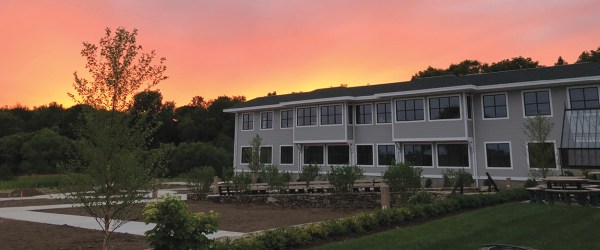
What is Facilities Maintenance?

A lot of relief comes with the completion of a residential or commercial project. But what comes next? Even after brand new construction, there is a great deal of upkeep to consider in order to maintain the quality and integrity of the buildings and grounds. Facilities maintenance ensures both general maintenance and emergencies are taken care of by experts.

Including the facilities manager during the planning and construction phases is a good idea. This allows the facilities manager to provide input, helping to decide what products and materials will hold up best for the space and foot traffic. Once the building is complete, facilities maintenance performs routine services to prevent degradation. Services of facilities maintenance may include:

  • General building repairs
  • Routine exterior painting and painting of interior common spaces
  • Implementation of operating procedures
  • Safety code compliance

In addition, if an emergency should arise, facilities maintenance has the expertise and contacts to fix the problem. Horton Group provides facilities maintenance services for both residential and commercial developments. We know quality maintenance will prolong the aesthetic appeal and product longevity of any space.

What makes a property ADA Compliant?

The Americans with Disabilities Act (ADA) is a civil rights law that prohibits discrimination against individuals with disabilities. It also ensures individuals with disabilities can enjoy the same rights and opportunities as everyone else.

The Annual Disability Statistics Compendium found that 12.8% of Americans are living with disabilities. This does not take into account senior citizens with decreasing mobility or those that are temporarily disabled due to events including accidents, illnesses, or medical procedures.

The ADA focuses on five different titles, or sections, to provide those with disability the right the equal opportunity. Title III (Public Accommodations) addresses “nondiscrimination on the basis of disability by public accommodations and in commercial facilities.” This includes privately owned facilities that are open to the public.

In 2010, the Department of Justice revised regulations within the original ADA of 1990. The regulations called for the 2010 ADA Accessibility Standards for Accessible Design, which set minimum requirements for newly constructed or renovated facilities to be accessible for individuals with disabilities.

There are a handful of requirements that must be made in all existing buildings and new construction deemed a public accommodation or commercial facility. A few requirements to be ADA compliant include:

  • Common use circulation paths in employee work areas in commercial work areas.
  • Accessible routes from site arrival points and within sites.
  • Alterations to primary function areas in existing buildings.

Here is the complete list of the requirements included in the Accessibility Standards for Accessible Design. For more general information about the ADA, click here.

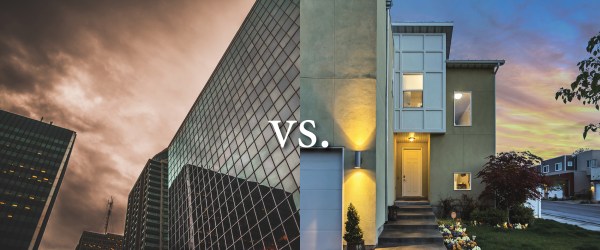
Commercial vs. Residential Real Estate

Benefits and Risks of Investing in Commercial and Residential Real Estate

As real estate developers, we take into account differences with commercial and residential real estate when building or renovating. With 350 Goose Lane Office Park development, we work to develop commercial office space that can be built-to-suit, while incorporating top of the line features and plenty of green space. At The Residences at 66 High Street, we focus on luxurious amenities and convenience for residents. Differences between commercial and residential do not stop with the development – there is also a lot to consider as an investor. We outline some of the key benefits and risks below.

Commercial Properties – Potential Benefits & Risks

If you have the funding and experience, there are a handful of potential benefits to investing in a commercial property.

  • Longer leases, generally ranging between 3-10 years, provide more stable income.
  • Less maintenance for the owner, developer, or property manager, assuming net lease agreements are in place.
  • Strong returns in the form of income and capital growth.

Commercial real estate ventures also come with potential downsides. Because commercial properties are pricier than most residential properties, they often require higher start-up costs. Also, finding tenants for open space can be difficult, particularly in a poor economy.

Residential Properties – Potential Benefits & Risk

Whether flipping houses or investing in large multi-family properties, residential real estate can be a great investment medium for individuals from all income brackets. The potential benefits include:

  • Lower start-up costs, whether you are buying a one family or multi-family property.
  • Easier to finance, with mortgage options for every type of buyer.
  • Tenants found faster, compared to commercial tenants.

While one can flip a house and put it right back on the market, being an investor or landlord in a residential property requires a great deal of involvement. In regards to property management, residential buildings require far more active participation than commercial properties, as lease agreements tend to take responsibilities out of tenants’ hands.

Investing in real estate can be a great way to diversify your investments and can also be relatively risk-averse if you know what to expect. Before committing to a commercial or residential property, it is important to understand what is required and what suits you best.

What is a Build-to-Suit Property?

Are you looking for an office space or residence, but none seem just right? There is no need to compromise. Build-to-suit (BTS) developments offer extreme flexibility, as a given room or building can be shaped to meet the various wants and needs for you or your business.

Build-to-suit properties are most often commercial leases, but can also be found in residential developments. With BTS, the landlord or developer builds to a tenant’s specifications. During construction the tenant is allowed the freedom to dictate his or her future space, as long as changes do not interfere with the structural and mechanical systems. Buyers or tenants can make significant changes through the restructuring of walls, rooms, and closets. Decisions on aesthetics, including finishes, appliances, and color scheme, are also made during the BTS process.

At Horton Group, we aim to please by offering build-to-suit developments. If you’re looking for a commercial property that can be built to meet your company’s needs, check out 350 Goose Lane Office Park. Our luxury condominium units at The Residences at 66 High Street can also be altered to fit your family’s needs.


Why is Green Space in a Commercial Development Important?

Formerly home to a plant nursery and landscape design company, the 16-acre site of 350 Goose Lane Office Park provides an amazing opportunity to reap the rewards of abundant green space.

Green space is any area of trees, grass, or vegetation, and is especially beneficial in commercial developments. Actions as simple as strategically planting trees can have significant impacts. In urban areas, green rooftops are an option when landscaping space is not available.  According to a report by the Natural Resources Defense Council (NRDC), net benefits of green space include:

  • Higher property values, rental rates, and retail sales
  • Lower energy costs
  • Reduced flood damage and infrastructure costs
  • Improved health and job satisfaction for tenants and employees

In the case of a leased property, developers, landlords, tenants, and employees all benefit. Expense-related benefits are particularly advantageous for tenants in a commercial space like 350 Goose Lane, as the leases offered are triple net, meaning the tenant pays for real estate taxes, building insurance, and maintenance.

Developers must preserve and implement green space wherever and whenever the opportunity is afforded to ensure that a project is economically and environmentally sustainable for all parties involved.

Website Built with WordPress.com.

Up ↑