What is Hardie Board Siding?

James Hardie was the first company to develop fiber cement siding and trim in the 1980’s. Since then, James Hardie has invested over $100 million in research, development, and product advancement. It is no wonder Hardie Board siding, just like the company, stands the test of time.

Longevity

James Hardie tests all siding and trim products against outdoor elements. This includes severe elements such as hurricanes, snowstorms, and fire, as well as more common elements including UV rays, rain, pests, and the changing of the seasons. James Hardie siding products come with a 30-year, non-prorated warranty, and trim products come with a 15-year, non-prorated warranty.

Region Specific Products

We all know that different climates have different weather elements, so James Hardie creates products for specific regions. Whether you live in a wet region, a state with freezing temperatures, or a hot and humid climate, the HardieZone® system will ensure you get the best type of siding for your region. Click here to enter your zip code and learn more.

Design

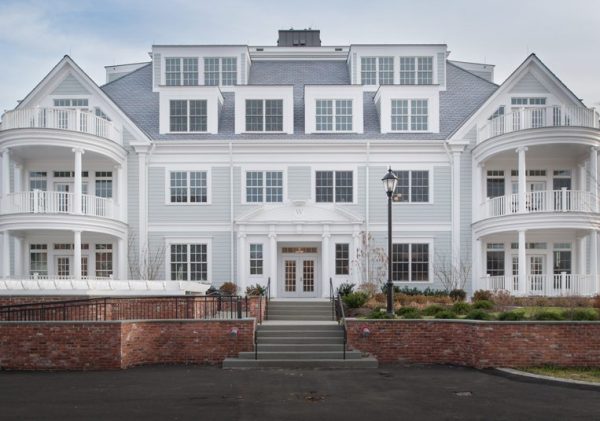
When it comes to real estate, we want it all – longevity and great design. Hardie Board siding and trim offers multiple options. Depending on your preferences, you can keep a traditional look, or create a modern aesthetic. James Hardie products also use ColorPlus® Technology, which helps keep color bright and fresh.

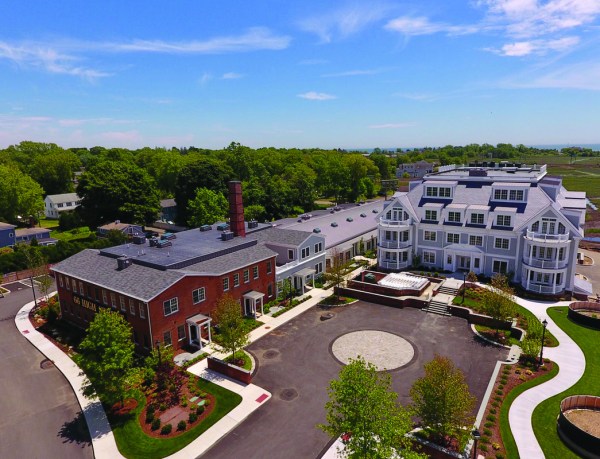
When building The Residences at 66 High Street, we knew we wanted superior quality, luxury appeal, and products that last. This is why we chose James Hardie products for our siding and trim.


What Makes a Property Energy Efficient?

Inefficient energy consumption is harmful to the environment and causes energy bills to skyrocket. At Horton Group, we aim to provide high-quality products that are economically and environmentally sustainable. We strive for energy efficiency, which saves future buyers and tenants money, while doing our part to save the environment.

While the term is often thrown around, people seldom understand the many factors that go into making a structure truly energy efficient. From the early stages of design and construction, to the appliances and systems set in place near completion, our projects like The Residences at 66 High Street implement building technologies to ensure energy efficiency. These include:

Using the above building techniques and appliances, along with those available on the Department of Energy website, developers, homeowners, and business owners can play a major role in reducing emissions for the sake of the environment and their savings. Energy efficient building techniques can reduce energy costs to a fraction of the overall average.

Energy efficiency in both new and old buildings is a low-risk investment. Occupants are sure to save substantial sums of money as a result of drastically lower energy costs. For investors, developers, and builders, any extra time and money spent on energy efficiency will pay off.


What’s it like living at 66 High Street?

Kathy Moniello, a resident at The Residences at 66 High Street, shares her experience of living in one of the luxury condominiums in Guilford. 

After selling an oceanfront home in Westbrook, Kathy moved to High Street in December 2017. “Because I was leaving something so beautiful, I knew I couldn’t settle,” she said. The Residences at 66 High Street have not disappointed.

“Everytime I pull in and see the beautiful grounds and walk to my unit, I feel joy and pride in ownership.” 

From the high-end units, to the friendly and supportive residents, to the helpful team at The Horton Group, Kathy has settled in to a new life in Guilford.

The high-end look and feel of 66 High Street, including the property, amenities, and individual units, is something Kathy appreciates. Within her unit, she loves the top of the line appliances, ample storage, and ability to customize to her needs and style. With the fitness room being completed, residents are bringing in a personal trainer for group classes a few times a week. Kathy is also looking forward to the proposed pool.

It’s easy to be captivated by a luxurious unit, but when paired with incredible neighbors, that unit becomes home. “I don’t know how we have attracted so many wonderful people,” says Kathy. The residents help each other out, spend time with each other, and have created a strong bond. “Last week,” she says, “we were all out with our dogs, then before you know it everyone went to get a bottle of wine. Someone got the pizza they were making, and we were all over at my unit having a little party.”

The Horton Group has spared no expense building the Residences at 66 High Street.

“They have been amazing throughout the entire process,” Kathy explained. “Whether it is Earl, Kenny, or Jason, they want the very best outcome.”

Kathy’s unit was completely finished when she bought it, but she wanted to make some changes, including switching to a stackable washer dryer and installing a central vac system. “This can be difficult to do post construction, but instead of saying, ‘It can’t be done,’ Jason came in, looked at what I wanted and said, ‘This is how we can make it happen.’”

By paying attention to every detail during the development, building, and marketing of 66 High Street, The Horton Group built more than luxury condominiums. They built an unparalleled community. And it was just what Kathy was searching for.


Interested in the Residences at 66 High Street? Schedule a showing today.

What makes a property ADA Compliant?

The Americans with Disabilities Act (ADA) is a civil rights law that prohibits discrimination against individuals with disabilities. It also ensures individuals with disabilities can enjoy the same rights and opportunities as everyone else.

The Annual Disability Statistics Compendium found that 12.8% of Americans are living with disabilities. This does not take into account senior citizens with decreasing mobility or those that are temporarily disabled due to events including accidents, illnesses, or medical procedures.

The ADA focuses on five different titles, or sections, to provide those with disability the right the equal opportunity. Title III (Public Accommodations) addresses “nondiscrimination on the basis of disability by public accommodations and in commercial facilities.” This includes privately owned facilities that are open to the public.

In 2010, the Department of Justice revised regulations within the original ADA of 1990. The regulations called for the 2010 ADA Accessibility Standards for Accessible Design, which set minimum requirements for newly constructed or renovated facilities to be accessible for individuals with disabilities.

There are a handful of requirements that must be made in all existing buildings and new construction deemed a public accommodation or commercial facility. A few requirements to be ADA compliant include:

  • Common use circulation paths in employee work areas in commercial work areas.
  • Accessible routes from site arrival points and within sites.
  • Alterations to primary function areas in existing buildings.

Here is the complete list of the requirements included in the Accessibility Standards for Accessible Design. For more general information about the ADA, click here.

What is the Role of a Project Manager?

Project managers, especially in construction, are responsible for juggling a handful of responsibilities. From start to finish, they carry out all aspects of the building process to align with the visions set forth by clients and developers. All the while, a project manager must ensure that tasks get completed safely, on time, and on budget.

Construction project managers must be experienced within the industry, as they tend to a variety of responsibilities requiring a great deal of knowledge. These include:

Planning: Before a project gets underway the project manager must establish a timeline for each stage of construction. Throughout construction, the project manager makes sure each stage is finished for timely completion.

Resource Management: Project managers must understand what resources and tools are required for a given project and have them available.

Staffing: Just as they are responsible for the resources for projects, a project manager is also responsible for staffing individuals of all trades. Hiring the correct people is essential, as the timeline and quality of work is dependant on it.

Setting Benchmarks: Setting benchmarks allow all parties involved to have a clear understanding of when certain things need to get done.

Budget Management: Project managers are responsible for the financial planning of a project and ensuring that the scope of work stays within budget. If any changes are made that influence cost, those too must be accounted for by the project manager.

While the above list encompasses the broad roles of a project manager, a lot more work goes on behind the scenes in order for a project to be completed on time and at a high quality. For a project manager to be successful, it takes a great deal of cooperation, communication, and confidence in his or her decisions.


What is Engineered Hardwood Flooring?

Hardwood floors are a sought after finish in any home. Hardwood floors create a high-end look, are durable and easy to clean, and have a low-allergy surface. But solid hardwood flooring can expand, contract, and warp during warm or humid months. This is why we choose to install engineered hardwood flooring from Neal’s Wood Flooring in The Residences at 66 High Street.

What is Engineered Hardwood Flooring?

Engineered hardwood flooring is made up of several layers. The top and bottom layers are 100% natural wood. The middle layers consist of plywood, hardwood, or fiberboard, and are crossed in different directions. Engineered hardwood flooring is typically between ⅜” and ¾” thick.

What are the benefits?

The construction of engineered hardwood flooring prevents warping and bowing, leaving you with durable, long-lasting floors. This allows you to install engineered hardwood flooring in areas of the home that are subject to moisture, such as basements or bathrooms. In these rooms, installation should occur with a protective moisture barrier.

What type of wood can be found in engineered flooring?

When it comes to engineered wood flooring, the possibilities are endless. You can find just about any type of wood, including hickory, oak, maple, walnut, birch, tigerwood, and even bamboo. You also have options for the surface finish, including wide or narrow boards, gloss or matte finish, or hand-scraped or distress for a rustic appearance.

Getting the right look is important when choosing wood floors. Depending on the room size, flow of traffic, and level of the room, some options will be more suitable than others. Neal’s Wood Floors answers some additional frequently asked questions here.


Certificate of Occupancy: What is a CO?

Certificates of occupancy (CO) determine whether a building is suitable for living or working. The primary purpose of a CO is to:

  1. Dictate a structure’s function. Functions of a structure can include residential, retail, commercial, or industrial properties.
  2. Determine if the structure is suitable for occupancy. Structure is suitable for occupancy so long as it complies with all standards and codes related to its function.
  3. Make sure a structure complies with building codes.

While requirements for COs may vary depending on location, they are typically needed in a number of different instances, which include:

  • New construction.
  • Property conversion – when the function of a building changes. The Residences at 66 High Street are an example, as the history industrial Mill Building was turned into residential units.
  • Change of ownership.
  • Major construction – Any construction that changes the occupancy of the property or alters the entrance or exit of the property.

Certificates of occupancy are ultimately awarded if the structure passes a number of inspections, which include plumbing, electrical, fire safety, and general building.


Condo Associations: What do they do?

Living in a condominium can be filled with perks, including the use of a fitness room or pool, lawn maintenance, and snow removal. In order to keep common areas maintained and unit owners happy, Condo Associations set rules, regulations, and fees for condominium and townhouse owners. The Condo Association’s board of directors, voted in by unit owners, oversees this work and handles disputes that may arise.

Condo Association Fees

In addition to paying a mortgage, unit owners pay condo association fees or dues. The board of directors determines how much members pay for the upkeep of the association. Fees can vary greatly depending on what amenities are available to unit owners. Condo association fees are used for the general upkeep of the property, such as landscaping, as well as repairs for common areas, such as new roofing.

Common Areas

Common Areas in condominium associations can include parking areas, sidewalks, lobbies, hallways, lawns, fitness rooms, pools, and recreational areas. These areas are for the use of all unit owners. Maintenance and repairs in common areas are paid from Condo Association dues. Condo Associations also have their own insurance policy for common areas. To learn more about what may be covered by your association vs. what your personal unit policy should cover, head to Allstate’s article on the topic.

Rules and Disputes

Condo Associations do not just pay for the upkeep of common areas, they also work to build an enjoyable living community for all members. This requires rules and regulations for unit owners. These rules can cover broader topics such as pet and noise regulations, down to color options for your front door. When disputes arise between members or rules are not followed, the board of directors is in charge of settling these cases, whether it is through warning letters, fines, or other means.

Condo associations can be very beneficial for members, but only if it’s regulations, fees, and perks are fitting with your lifestyle. Learn as much as you can about the association before buying a new unit. Laws for condo living vary state to state, so also look into State Condo Laws.


Commercial vs. Residential Real Estate

Benefits and Risks of Investing in Commercial and Residential Real Estate

As real estate developers, we take into account differences with commercial and residential real estate when building or renovating. With 350 Goose Lane Office Park development, we work to develop commercial office space that can be built-to-suit, while incorporating top of the line features and plenty of green space. At The Residences at 66 High Street, we focus on luxurious amenities and convenience for residents. Differences between commercial and residential do not stop with the development – there is also a lot to consider as an investor. We outline some of the key benefits and risks below.

Commercial Properties – Potential Benefits & Risks

If you have the funding and experience, there are a handful of potential benefits to investing in a commercial property.

  • Longer leases, generally ranging between 3-10 years, provide more stable income.
  • Less maintenance for the owner, developer, or property manager, assuming net lease agreements are in place.
  • Strong returns in the form of income and capital growth.

Commercial real estate ventures also come with potential downsides. Because commercial properties are pricier than most residential properties, they often require higher start-up costs. Also, finding tenants for open space can be difficult, particularly in a poor economy.

Residential Properties – Potential Benefits & Risk

Whether flipping houses or investing in large multi-family properties, residential real estate can be a great investment medium for individuals from all income brackets. The potential benefits include:

  • Lower start-up costs, whether you are buying a one family or multi-family property.
  • Easier to finance, with mortgage options for every type of buyer.
  • Tenants found faster, compared to commercial tenants.

While one can flip a house and put it right back on the market, being an investor or landlord in a residential property requires a great deal of involvement. In regards to property management, residential buildings require far more active participation than commercial properties, as lease agreements tend to take responsibilities out of tenants’ hands.

Investing in real estate can be a great way to diversify your investments and can also be relatively risk-averse if you know what to expect. Before committing to a commercial or residential property, it is important to understand what is required and what suits you best.

Flood Zones and FEMA Compliant Building

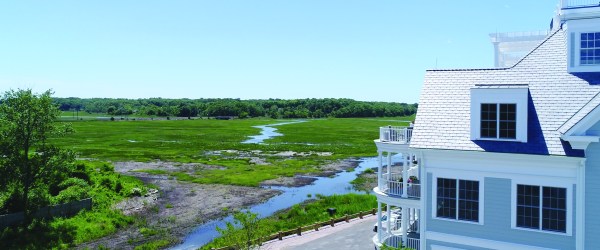
Overlooking the marsh and Long Island Sound, it should not come as a surprise that the property at The Residences at 66 High Street sits within a flood zone. But what does this mean and why is there no reason to worry?

As described by the Federal Emergency Management Agency (FEMA), flood zones vary based on location. At low elevation and in close proximity to the ocean, the site at 66 High Street lies in a Special Flood Hazard Area (SFHA). An SFHA is an area that can become flooded in the event of a 1-percent annual chance flood, also known as a base or 100-year flood. For more details about SFHAs, as well as moderate and minimal flood hazard areas, check out FEMA’s explanation.

See here how the property falls within the base flood zone. All structures comply with FEMA standards. Living spaces have been raised seventeen feet, seven feet above the 100-year floodplain. Raising the first floor of the Whitfield, Leete, and Chittenden buildings allowed us to conveniently place resident parking in the new buildings underground.

As a result of adapting to meet flood management regulations, flood insurance costs are a mere fraction of what they otherwise would have been. In addition to the security systems in place on site, the storm-resilient buildings at 66 High Street can provide residents with a furthered sense of security and peace of mind.

Website Built with WordPress.com.

Up ↑